FACILITY
Site context
Address, building use, access arrangement, operating hours and who owns the water-treatment decision.
The goal of an initial assessment is to create a clear record of what the facility has, why the system exists, what changed and what needs to be investigated. This avoids a vague “filter issue” conversation and provides a basis for evaluating an existing carbon vessel.
Address, building use, access arrangement, operating hours and who owns the water-treatment decision.
Vessel count, labels, valve images, treatment stages and available service documentation.
The quality concern, scheduled service, treatment goal or downstream issue the facility wants to understand.
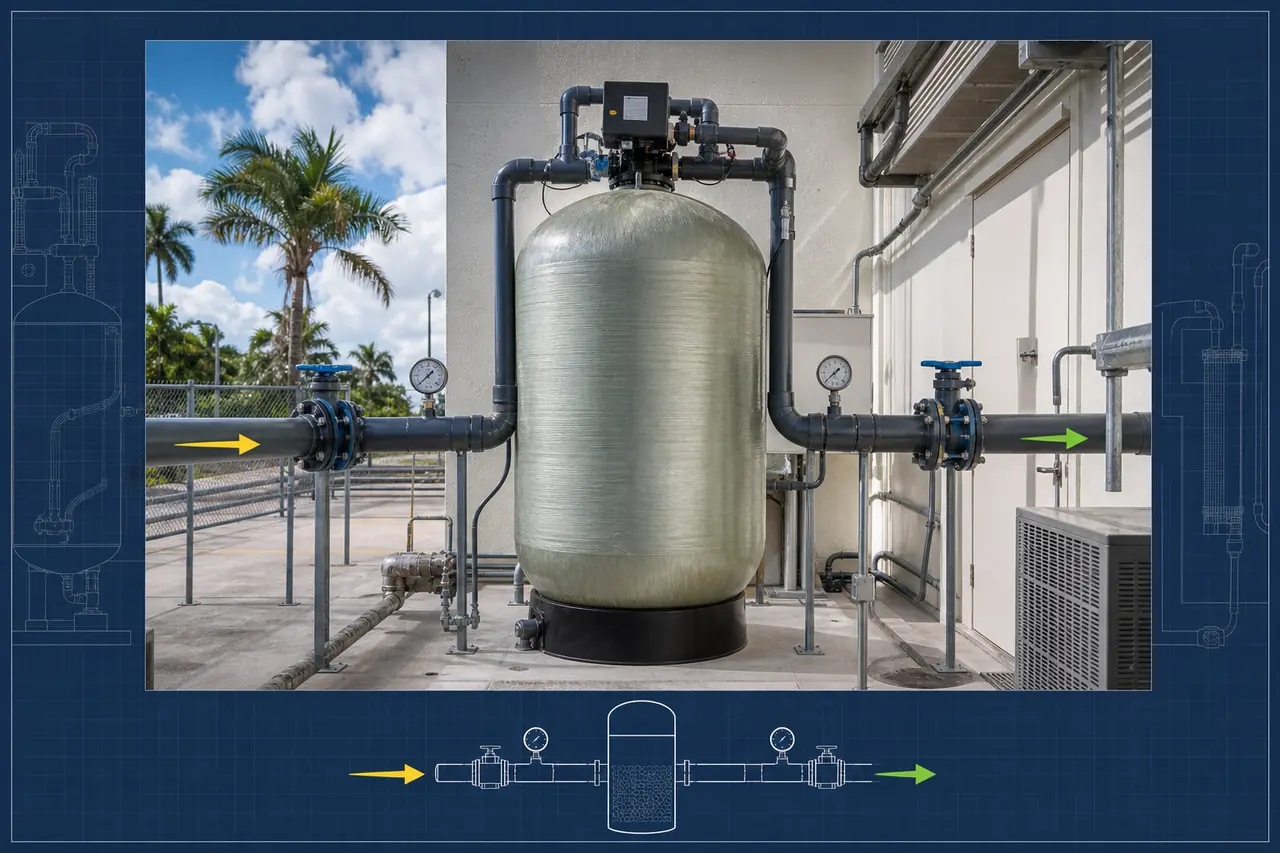
Facility teams sometimes inherit equipment without a full file. That does not prevent an assessment—it simply makes photos, labels, service invoices and staff observations more important.
A clear initial record also separates a carbon-vessel question from a pressure, plumbing, softener, reverse-osmosis or point-of-use issue that could require a different line of investigation.
Wide equipment-room photos, vessel labels, control valves, gauges, piping connections and any visible treatment stages are a useful start. Do not dismantle equipment just to take photos.
Share what the facility does know: approximate age, records on hand, staff observations and the current reason for the request. Unknown history is a fact to record, not a reason to invent an answer.
No. It is an information-gathering step. Any actual service scope, availability or capability must be confirmed after the relevant system and site information are reviewed.