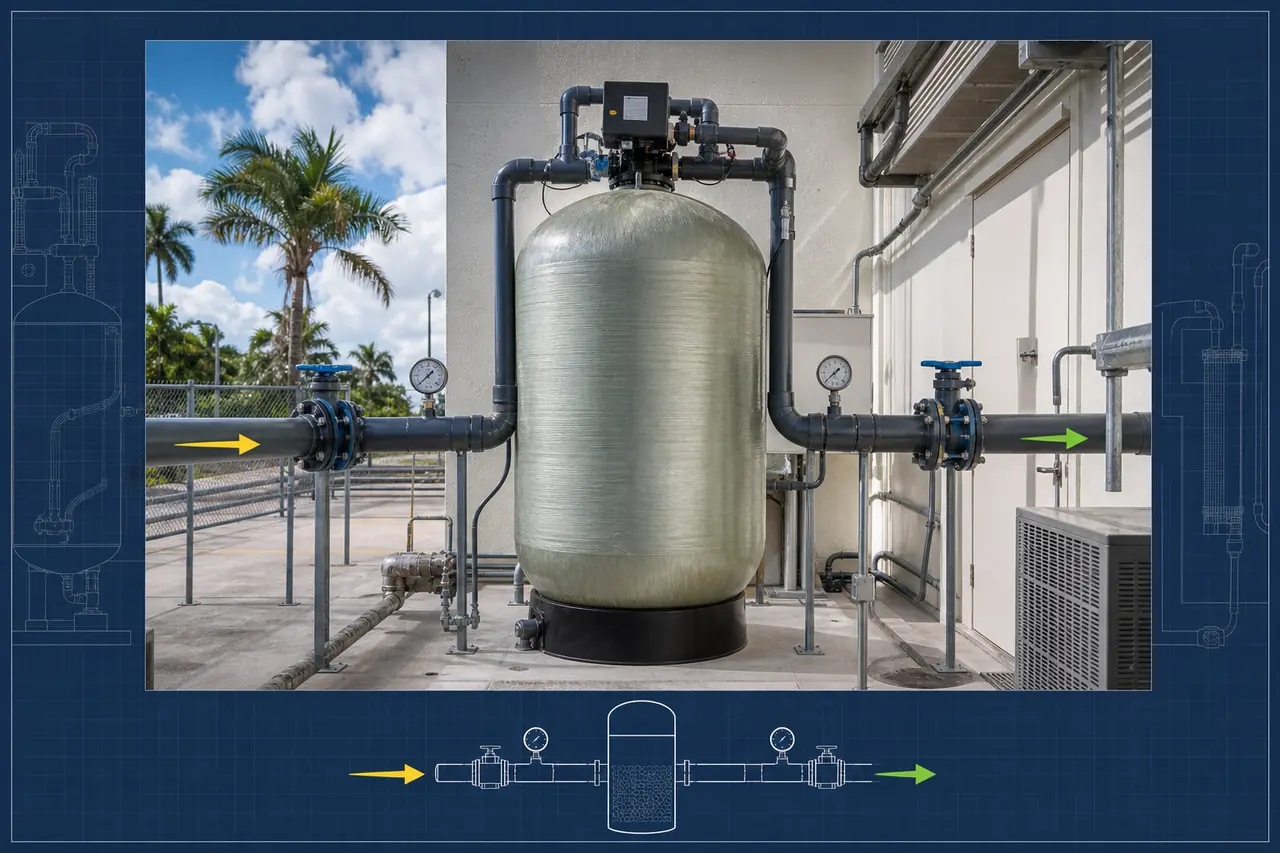
Activated carbon can serve several treatment purposes. Before anyone can responsibly discuss replacement, the existing vessel, water objective, media history, flow and site constraints need to be understood.
That is particularly important in Palm Beach County, where municipal-source treatment and individual facility conditions can differ. The system’s documentation and current observations are the right place to begin.
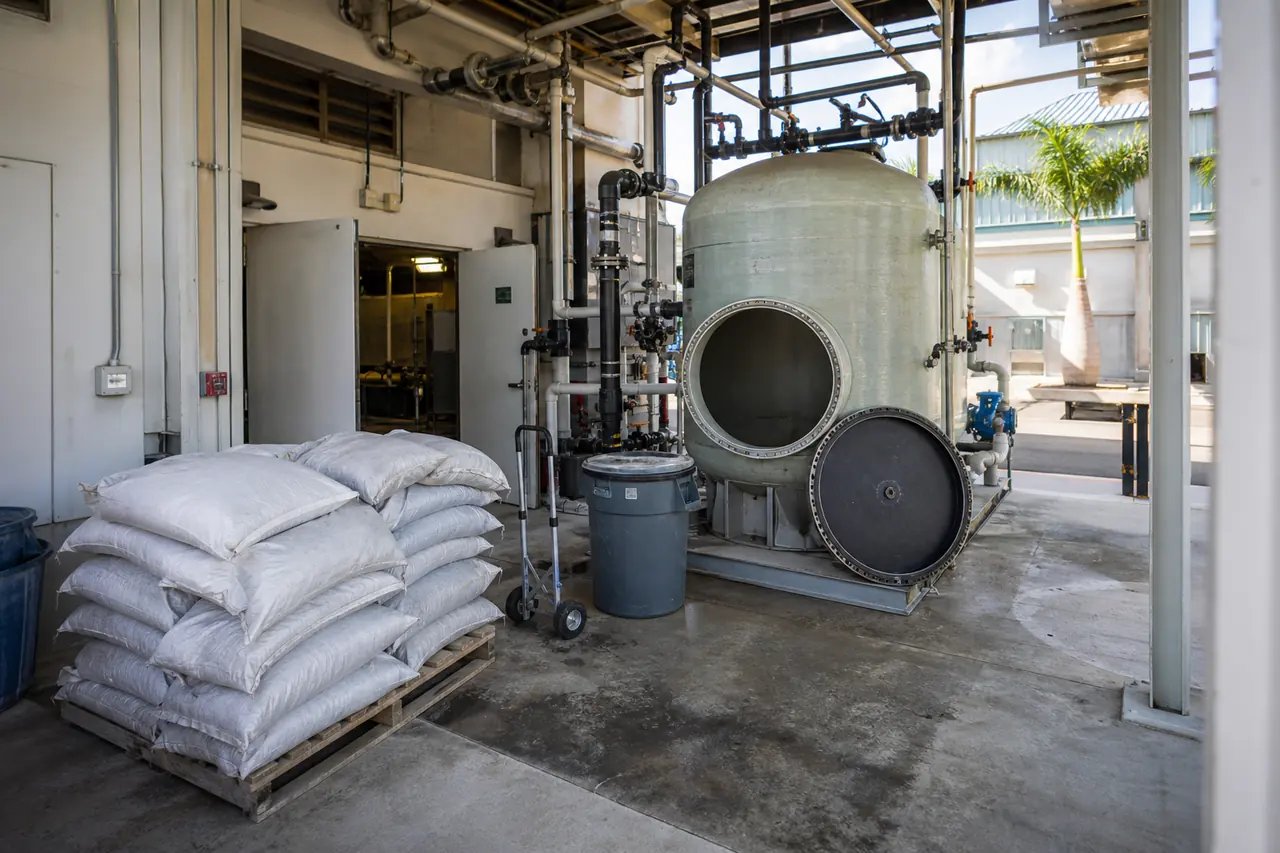
What a facility team can prepare.
1. Vessel and valve details. Photos and labels help identify what is in place.
2. Treatment goal. Note the customer-facing, process or equipment-protection concern the system is meant to support.
3. Service history. Capture known installation, media or valve work, even if records are incomplete.
4. What changed. A scheduled interval, taste/odor concern, water test or operational change gives the conversation a focus.
“Carbon” alone is not a complete specification.
Carbon type, particle size, vessel size, contact time, flow and the compounds being addressed all influence how a system operates. The right action is not determined by a page or a generic interval alone.
For that reason, this page is educational and deliberately does not promise a universal media life, price, performance result or scope. Any actual service conversation has to follow equipment and site review.