01 · DOCUMENT
Identify the vessel
Gather tank labels, valve information, photos and known treatment stages so the discussion starts with the actual equipment.
For Palm Beach County property and facility teams with an existing carbon vessel, an approaching media interval, or a change in water quality worth documenting.
Request an assessmentActivated carbon is commonly used in water-treatment systems to adsorb certain compounds such as chlorine, chloramine, tastes and odors. Whether it remains effective depends on the media specification, vessel configuration, flow, incoming water and the objective of the system. A credible recommendation has to begin there—not with a generic replacement promise.
Gather tank labels, valve information, photos and known treatment stages so the discussion starts with the actual equipment.
Record the maintenance interval, taste/odor concern, water test or downstream equipment issue that created the question.
Review the information against the facility’s water objective and determine what needs further inspection or testing.
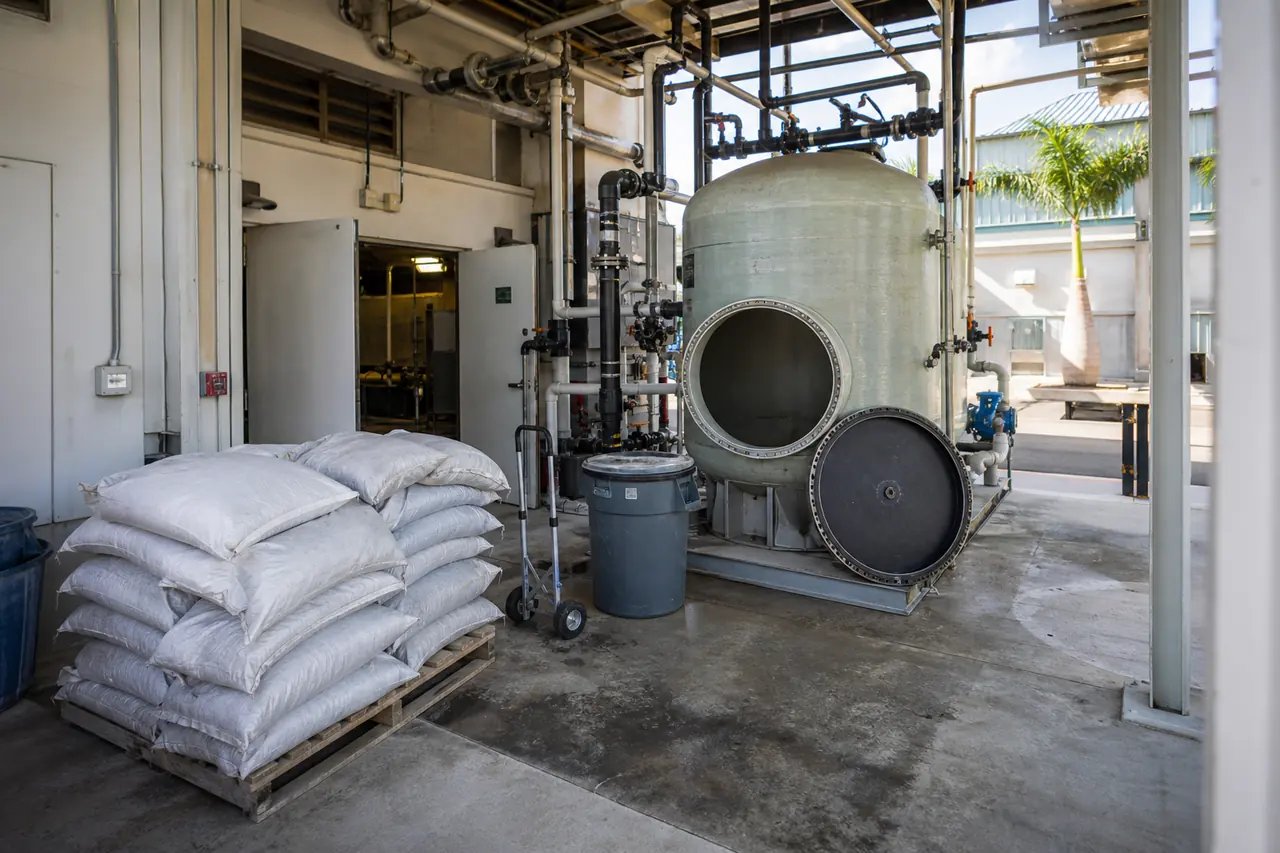
It is not simply a universal calendar event. Media reaches a point where its adsorption capacity, condition or service plan warrants review. A commercial discussion should account for the vessel internals, valve/control configuration, media type, water conditions and facility requirements.
Explore media replacementWhere is the system, who relies on it, and what access or operations constraints matter?
What vessels, labels, visible stages and past work records are available?
What is the treatment system intended to address, and what changed?
What information, testing or on-site review is needed before a scope can be considered?
Equipment-room photos, vessel/valve labels, prior service records, any water-test information, the facility address and a description of the change or scheduled work are all useful starting points.
No. Carbon media selection and vessel configuration depend on the treatment goal and water conditions. The system on site should be identified before assuming what a media-service scope involves.
Yes. The first step is still to document the equipment and the facility’s actual question. That prevents the conversation from relying on assumptions about prior installation or maintenance.